





How Grain Storage Can Create Pricing Power
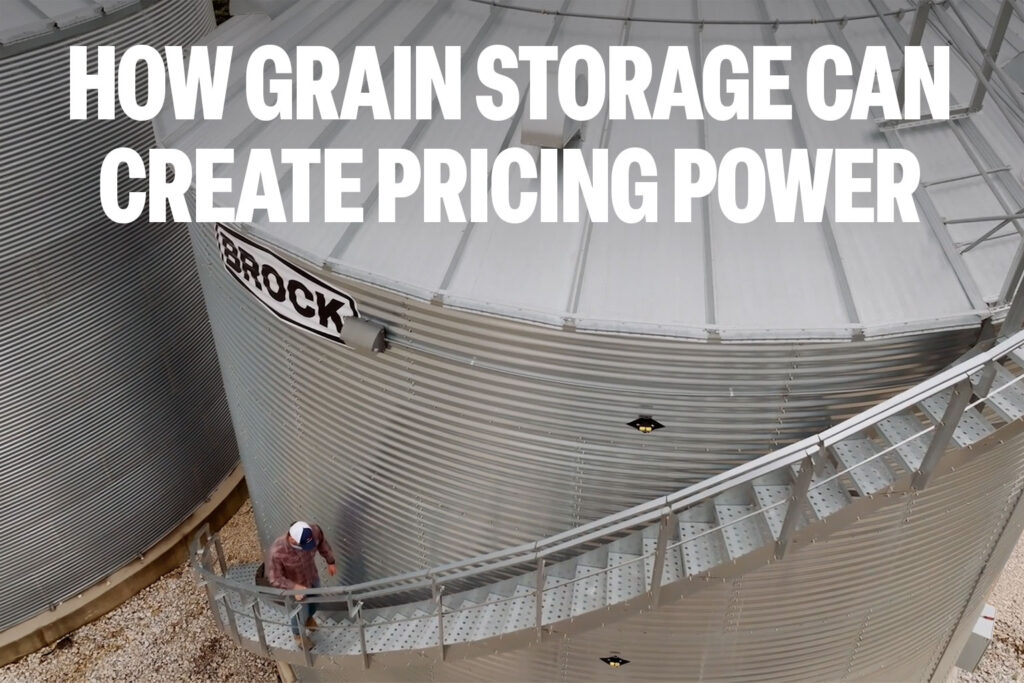
When producers think about grain storage, the first benefits that often come to mind are harvest efficiency and logistics.
But grain storage can continue to create value long after harvest. Not because it predicts the market. Because it gives producers more flexibility in how—and when—they market their grain.
Timing Matters
Harvest is typically when grain supplies are at their highest. Elevators are busy. Commercial storage fills. Transportation systems are under pressure. Those conditions often contribute to weaker basis levels during harvest.
As grain moves through the system and local demand changes, basis often strengthens in many markets. Storage gives producers the ability to wait for those opportunities instead of being limited to selling at harvest.
A Simple Example
Let’s say the local cash basis at harvest is 40¢ under the futures price. By January, local demand has improved, and the basis strengthens to 15¢ under.
That’s a 25-cent improvement in basis before accounting for storage costs, interest, shrink, or changes in the futures market.
If the futures market is also offering carry for later delivery, the opportunity to store grain may become even more attractive.
Every operation’s costs and marketing strategy are different, so there’s no one-size-fits-all answer. The point isn’t that storage guarantees a better return.
It’s that storage gives producers the flexibility to evaluate market conditions and choose when to sell, rather than being forced to market grain during harvest.
Basis Isn’t the Only Opportunity
Another factor is carry in the futures market.
In some years, deferred futures contracts trade above nearby contracts, creating an incentive to store grain for future delivery. Not every year produces meaningful carry. And carry alone doesn’t guarantee additional profit.
But when stronger basis and favorable futures spreads occur together, storage gives producers the flexibility to take advantage of both.
Freight Can Influence Marketing Decisions
Transportation costs can also shift throughout the year. During harvest, trucking demand is often at its highest as grain moves from the field to storage and commercial facilities.
Outside of harvest, freight availability may improve, depending on local conditions.
For some operations, that creates another opportunity to market grain when logistics work in their favor.
Storage Creates Marketing Options
Markets change. Basis changes. Freight costs change. That’s exactly why storage matters.
Storage doesn’t guarantee a better price. It creates options.
The ability to respond when opportunities develop instead of making every marketing decision during harvest can be one of the greatest advantages of on-farm storage.
Brock Perspective
Grain storage is about more than harvest capacity. It’s a management tool that can create greater marketing flexibility throughout the year.
While no one can predict markets, having grain in your own system gives you more opportunities to respond when basis, futures, and freight conditions align with your marketing strategy.
More on Grain Storage Planning
Continue building your grain storage strategy with these related articles.
- America’s Grain Storage Cushion Is Shrinking
Why tighter storage capacity is changing the way farms prepare for harvest.
- Is Your Grain System Ready for the Next Record Harvest?
How growing production continues to put pressure on grain handling systems.
- The Hidden Cost of Harvest Bottlenecks
Where delays develop and how they affect harvest efficiency.
- How Much Grain Storage Does Your Farm Actually Need?
Questions to help evaluate whether your current storage capacity fits your operation.
- How to Make On-Farm Grain Storage Pay
Insights into the economics of grain storage systems.
To get the next article delivered to your inbox, subscribe to Brock News:
About the author:
Bill Winchell is a District Manager at Brock Grain Systems with more than 35 years in the role and over 50 years of hands-on experience in the grain industry. He began his career in grain elevator operations in 1972, later managed a family farm machinery dealership, and then moved into grain systems sales with Butler Manufacturing before joining Brock when CTB acquired Butler Grain Systems in 1997. Today Bill covers Wisconsin, Minnesota, North Dakota, and western Canada, and is widely regarded within the company as a leading resource on grain dryer operations and service.

District Manager
Brock Grain Systems
How Much Grain Storage Does Your Farm Actually Need?
Part 4 of a 5-part series. As yields continue to grow, storage capacity matters more than it used to. For a lot of farms, the question is no longer: “Do I need grain storage?” It’s: “How much is enough?”
How to Make On-Farm Grain Storage Pay.
Part 5 of a 5-part series. Throughout this series, we’ve looked at tighter grain systems, harvest bottlenecks, and storage pressure. Now the question becomes: Does storage actually pay?
Is Your Grain System Ready if the Crop Holds?
Is your grain system ready for a strong crop? Evaluate storage capacity, handling speed, and harvest readiness before the combines start rolling.