





How to Make On-Farm Grain Storage Pay
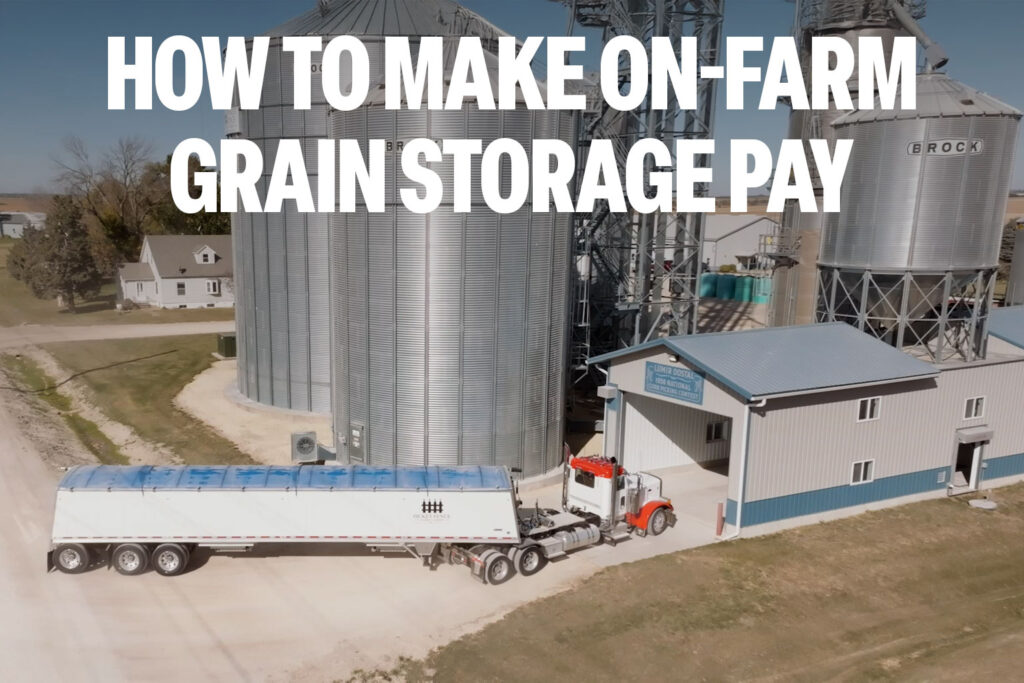
Part 5 of a 5-part series
Throughout this series, we’ve looked at:
- tighter grain systems
- harvest bottlenecks
- storage pressure
- how farms size their systems
Now the question becomes: Does storage actually pay?
Storage Creates Opportunity
Storage doesn’t guarantee better pricing.
But it does create opportunity.
That’s an important difference.
Storage won’t control the market. And not every year delivers the same return.
What it does give you is flexibility—the ability to make decisions based on market conditions instead of harvest pressure.
And in tighter systems, that flexibility can become more valuable.
Why Basis Matters
One of the biggest advantages tied to storage is basis improvement.
At harvest, grain supplies are usually at their highest:
- elevators are busy
- transportation systems are tight
- more grain is moving at the same time
That often creates the weakest basis levels of the year.
Later in the season, basis frequently improves.
Storage doesn’t guarantee that happens.
But it gives you the ability to wait if the opportunity is there.
Sometimes the Market Pays You to Wait
In some years, the futures market offers carry.
In simple terms, that means the market may reward storing grain and selling or delivering it later instead of at harvest.
Not every year works that way.
But without storage, you may not have the option to take advantage of it.
Freight Timing Matters Too
One advantage that sometimes gets overlooked is freight timing.
Harvest is usually the busiest time to move grain:
- elevator lines are longer
- trucking gets tighter
- roads and field conditions can worsen
- freight rates may increase
Moving grain outside peak harvest windows can sometimes improve efficiency and reduce stress on the operation.
In some cases, the value of storage has just as much to do with logistics as pricing.
Where Storage Often Creates Value
A lot of economists describe storage the same way:
Storage creates value during key moments—when markets shift, logistics tighten, or timing creates opportunity.
Not every season delivers those opportunities equally.
But over time, flexibility matters.
What the Numbers Look Like
Let’s say your farm harvests 200,000 bushels of corn.
If market conditions improve by $0.40 to $0.60 per bushel after harvest, that could represent:
$80,000 to $120,000 in additional revenue opportunity. *
That return is never guaranteed.
Markets change every year.
But it shows how even modest price changes can become meaningful across a large crop.
What Market Experts are Seeing
Richard and David Brock of The Brock Report (no relation to Brock Grain Systems, but a fitting coincidence) have tracked grain markets and advised producers across the U.S. since 1980, managing grain sales on approximately 800,000 acres nationwide.
David Brock says producers who have on-farm storage are often in a stronger position to capture market opportunities after harvest.
“Over the last 15 years (2011-2025), the spot prices in April and May average 12-15% ($0.52-$0.68) above the spot October price across Iowa, Nebraska, Illinois and Indiana. This increase is even more dramatic over the last five years. While we don’t recommend ‘store and ignore’ as a marketing strategy, if you find yourself with unsold bushels at harvest and a depressed futures market, the ability to store frequently pays off. In years like this one, with the corn market currently paying 16¢ from the Dec. to March futures alone, selling off the March and capturing likely basis improvements will really impact the bottom line.”
Storage Still Has a Cost
Of course, storage systems cost money.
Bins, drying systems, handling equipment, labor, maintenance, and interest costs all matter.
And not every year pays for storage on pricing alone.
But over time, flexibility can add up in a lot of different ways:
- better harvest flow
- more marketing flexibility
- fewer bottlenecks
- more control over timing
- better freight flexibility
Taken together over multiple seasons, those advantages can become meaningful. For most operations, the payback timeline is shorter than you might expect.
Richard Brock believes the value of storage extends well beyond price improvement.
“As a rule of thumb, grain storage will pay 100% within three years,” said Brock. “It’s the best investment a farmer can make for the quickest return. The payback comes two ways: the convenience of not being truck number 30 in line, and the ability to take advantage of basis improvement after harvest.”
The Bigger Picture
Farmdoc data continues to show the grain system operating with less excess capacity than it used to.
In 2025, crop production was closer to total grain storage capacity than at any point since the late 1980s, leaving less room in the system to absorb large crops, transportation disruptions, or other pressures. **
As systems tighten, volatility tends to increase:
- basis swings
- delivery pressure
- logistics challenges
And when volatility increases, flexibility usually becomes more valuable.
The Bottom Line
On-farm storage gives you more than a place to put grain.
It gives you more control over:
- timing
- logistics
- pricing decisions
And in tighter grain systems, that flexibility matters more every year.
Brock Perspective
On-farm storage isn’t just an expense. It’s an investment in flexibility. And over time, flexibility can help you capture opportunities instead of reacting to pressure.
*Example for illustration purposes only. Actual results vary based on market conditions, timing, basis, storage costs, and local factors.
**Janzen, J. US Grain Storage Capacity Growth Has Stopped. farmdoc daily (16): 20, Department of Agricultural and Consumer Economics, University of Illinois at Urbana-Champaign, February 9, 2026.
To get the next article delivered to your inbox, subscribe to Brock News:
About the author:
Doug Moore is a District Manager at Brock Grain Systems, serving customers throughout Iowa, Missouri, and the southwestern United States. He joined Brock in 2023, bringing more than 15 years of leadership and operations experience. Prior to joining Brock, he served as an operations manager for a multinational company, where he was responsible for leading sales and service operations with a focus on customer satisfaction, business growth, profitability, and long-term account relationships. With a background in operations management, sales leadership, and customer-focused problem solving, Moore brings a practical perspective on helping farmers improve efficiency and make informed decisions about their grain storage and handling systems.

District Manager
Brock Grain Systems
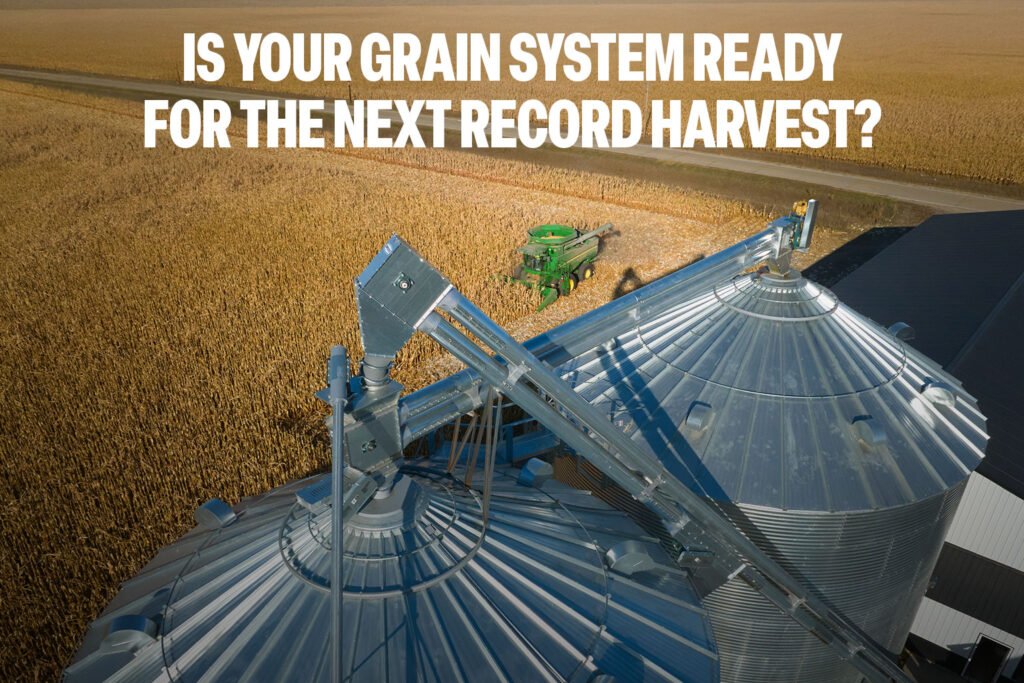
Is Your Grain System Ready for the Next Record Harvest?
Part 2 of a 5-part series. In a recent article, we looked at how the grain system is tightening. One of the first places that shows up is during harvest.
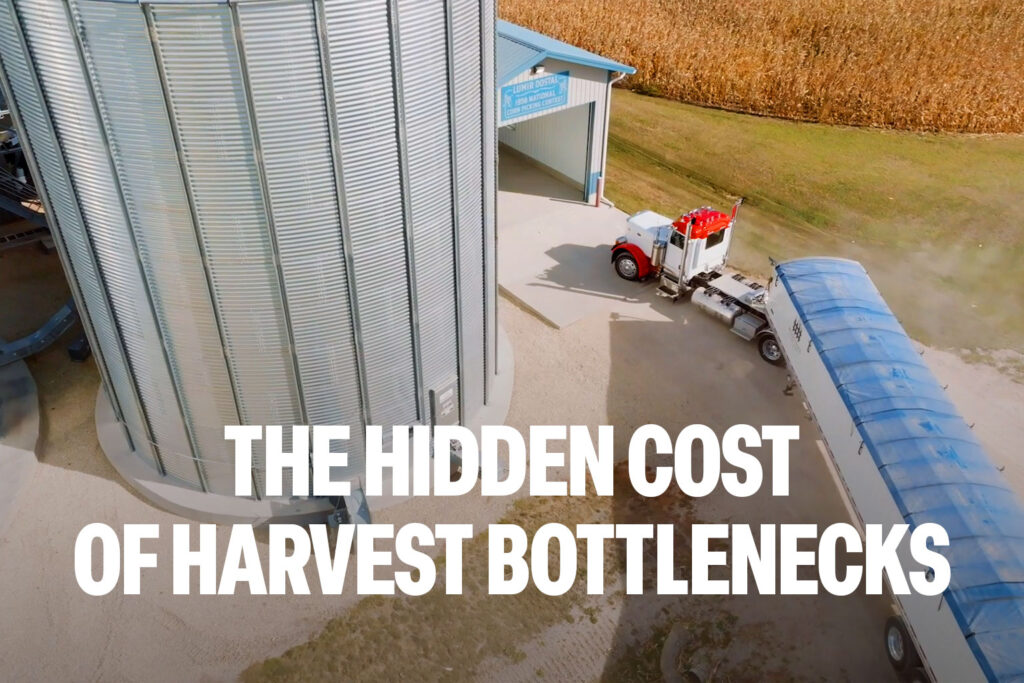
The Hidden Cost of Harvest Bottlenecks.
Part 3 of a 5-part series. Previously we looked at how tighter storage shows up during harvest. One of the biggest impacts isn’t just operational—it’s financial.
How Much Grain Storage Does Your Farm Actually Need?
Part 4 of a 5-part series. As yields continue to grow, storage capacity matters more than it used to.
For a lot of farms, the question is no longer: “Do I need grain storage?”
It’s: “How much is enough?”