




Part 2 of a 5-part series
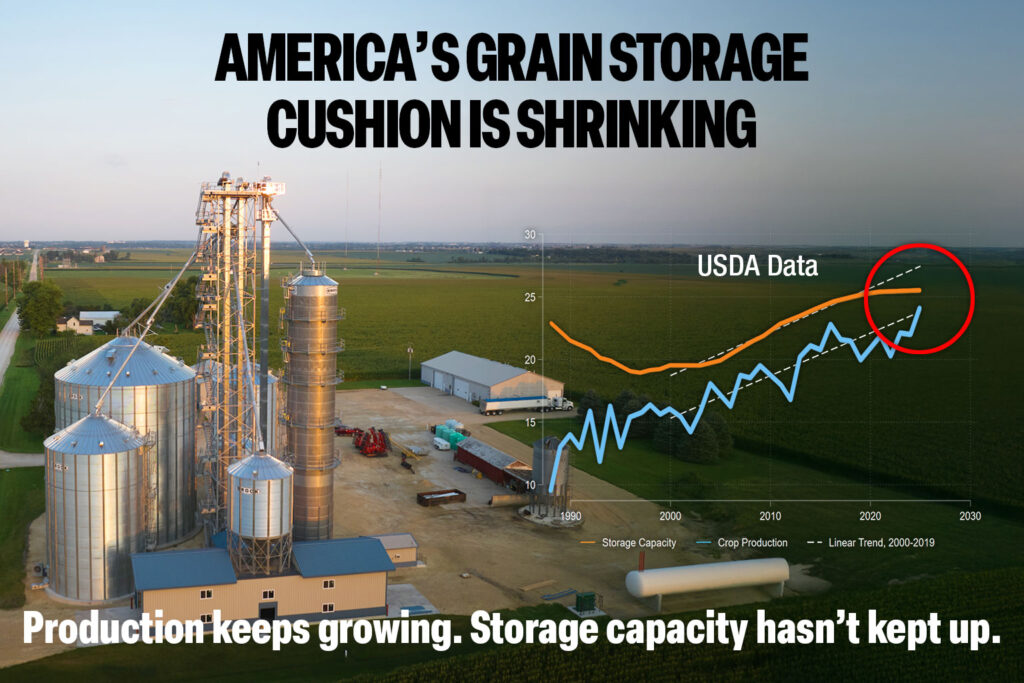
In a recent article, we looked at how the grain system is tightening. One of the first places that shows up is during harvest.
Harvest Has Become a Speed Game
Today’s combines can cover acres quickly. Grain carts and trucks move fast.
That changes the nature of harvest.
It’s not just about cutting crop anymore.
It’s about keeping everything moving—continuously.
And that puts pressure on every part of the system. As equipment gets more efficient, the rest of the system has to keep up, or it becomes the limiting factor.
Where Bottlenecks Actually Occur
Your grain system is a chain:
Field → Combine → Cart → Truck → Dryer → Storage
It only moves as fast as its slowest point.
If you’ve ever had:
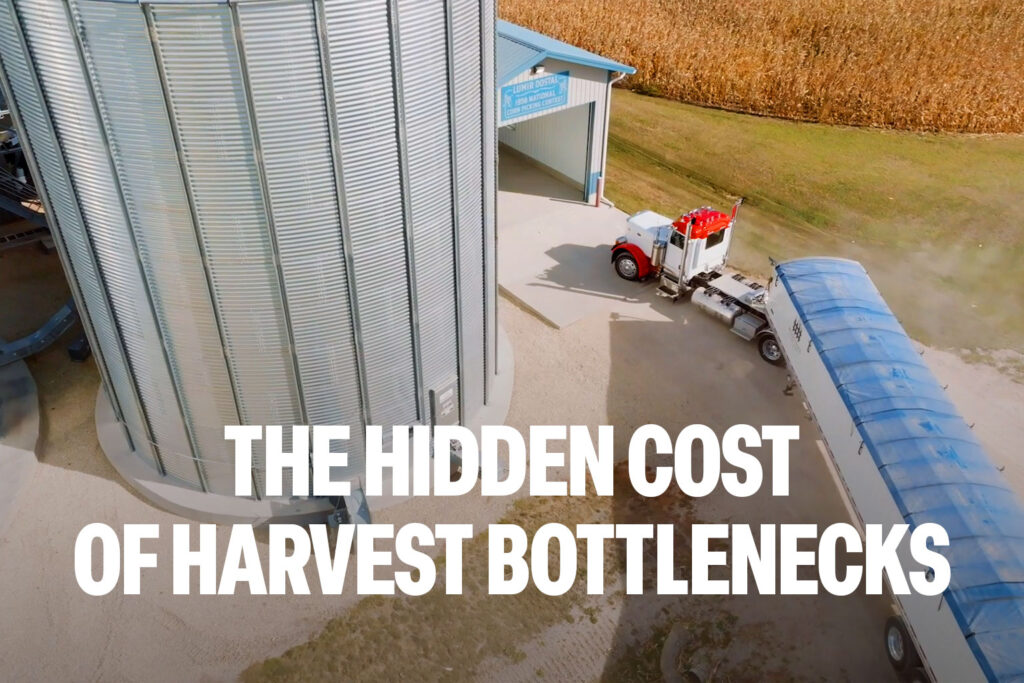
- trucks waiting at the bin
- a dryer that can’t keep up
- bins filling before you’re done harvesting
—you’ve seen where the pressure shows up.
And often, it’s not one big failure, it’s a series of small slowdowns that build on each other.
A Real-World Scenario
Let’s say you’re running multiple combines during peak harvest.
If trucks start waiting even 20–30 minutes to unload, that delay compounds quickly:
- grain carts fill up
- combines slow down or stop
- labor becomes less efficient
What starts as a small delay turns into a system-wide slowdown. And once that happens, it’s difficult to recover the lost time, especially in a tight harvest window.
What Happens When the System Can’t Keep Up
When capacity falls behind, decisions change.
- grain gets moved sooner than planned
- loads get redirected
- timing becomes reactive
If you’ve ever sold grain earlier than you wanted just to keep things moving, you’ve experienced this firsthand. In those moments, the priority shifts from maximizing value to maintaining flow.
It’s Not Just About Storage
This isn’t just a bin issue.
It’s a system issue.
- handling speed
- drying capacity
- unload efficiency
All of it matters.
A farm might have enough storage on paper, but if grain can’t move into or out of that storage fast enough, the system still slows down. That’s where planning for flow, not just capacity, becomes important.
The goal isn’t just more storage.
It’s a system that keeps harvest moving.
A Simple Gut Check
A few practical questions can help evaluate your system:
- Are trucks waiting regularly during peak harvest?
- Is drying capacity limiting how fast grain can move?
- Do bins fill before harvest is complete?
If the answer to any of these is yes, the system may already be under pressure, even if it hasn’t caused major issues yet.
The Bottom Line
Harvest isn’t getting smaller.
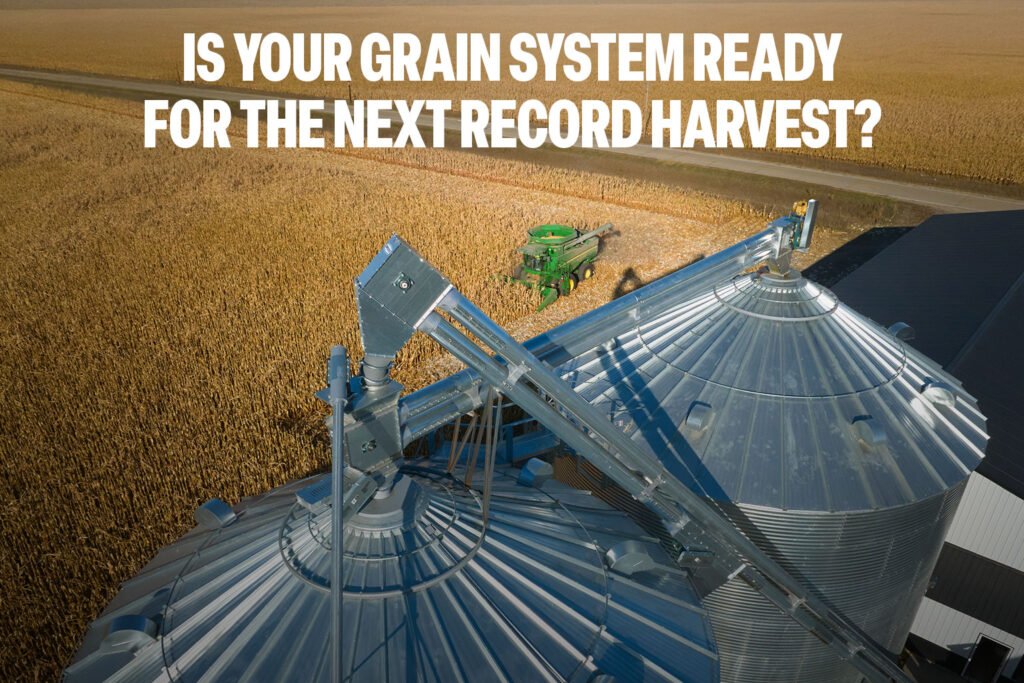
The question is whether your system can keep up when it matters most.
Brock Perspective
As farms grow and harvest windows tighten, having a grain system that keeps up isn’t optional. It’s part of staying competitive.