




Part 1 of a 5-part series
For more than two decades, the U.S. grain system ran on balance.
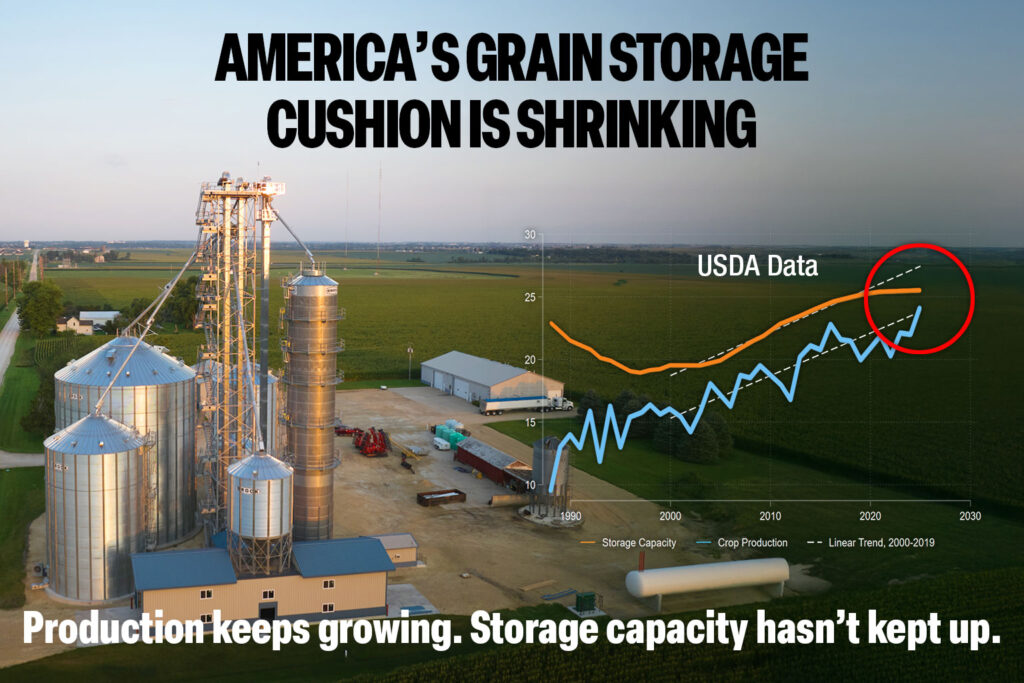
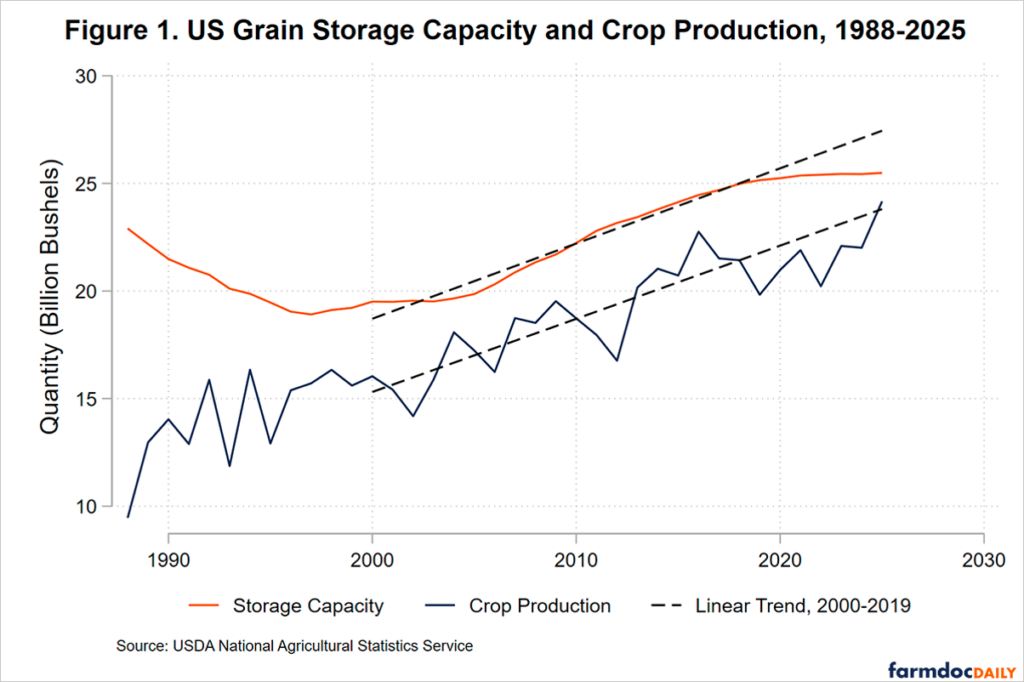
As production increased, storage capacity increased right alongside it. From 2000 through 2019, both grew at nearly the same pace: roughly 350 million bushels per year, according to University of Illinois Farmdoc Daily*.
That balance mattered. It meant the system had room to operate. Grain could move. Harvest could flow. Farmers had options.
That balance has changed.
A System That’s Getting Tighter
In recent years, storage capacity growth has slowed significantly. Production hasn’t.
The result is a tighter system, one with less margin for error.
On a lot of farms, this shows up in simple ways:
- bins filling earlier in harvest
- less flexibility on where grain goes
- more pressure to keep things moving
There’s less buffer in the system than there used to be. And when that buffer shrinks, even a strong harvest year can start to create friction in places that didn’t used to feel it.
What This Looked Like Before
Ten or fifteen years ago, a big crop didn’t stress the system the same way.
There was more room—both on the farm and at the elevator. Grain could be staged, held, and moved without as much urgency, and small delays didn’t ripple through the entire operation.
Today, that margin is thinner.
When yields push higher, you feel it faster. Elevators fill sooner. Delivery windows tighten. And the system starts to push back.
If you’ve noticed harvest getting a little more compressed, or delivery getting a little tighter, you’re not imagining it. That’s what a tighter system looks like in practice.
Why That Matters
Grain moves nationally. But for you, it moves locally.
And locally, that margin can disappear quickly.
When storage tightens, you’re more likely to see:
- elevators filling sooner
- tighter delivery windows
- weaker harvest basis
- more short-term storage decisions
If you’ve ever had to adjust plans mid-harvest just to keep things moving, that’s what this looks like in practice. And those adjustments, even small ones, tend to happen more often as the system tightens.
A Continued Shift Toward On-Farm Storage
More of the crop is being held on-farm, at least initially.
For many operations, that comes down to control:
- when you move grain
- where it goes
- when it’s sold
If you’ve invested in storage, you’ve probably already felt that difference. You’re less dependent on elevator schedules and more able to move grain when it makes sense for your operation.
What This Means at the Farm Level
A tighter system doesn’t affect every farm the same way.
Farms with adequate storage and handling capacity can keep harvest moving and make more deliberate decisions about when grain leaves the farm.
Farms without that flexibility often feel more pressure:
- to move grain sooner
- to accept available delivery options
- to make decisions in the moment
Over time, that difference adds up—not just operationally, but financially.
The Bottom Line
Grain production continues to grow. Storage capacity hasn’t kept pace.
The gap is still manageable, but it’s narrowing.
And over time, that shows up where it matters most: harvest.
Brock Perspective
As production trends continue upward, the farms that stay ahead of storage and handling capacity will be in a stronger position, not just during harvest but throughout the marketing year.
To get the next article in this series delivered to your inbox, subscribe to Brock News:
*Janzen, J. US Grain Storage Capacity Growth Has Stopped. farmdoc daily (16): 20, Department of Agricultural and Consumer Economics, University of Illinois at Urbana-Champaign, February 9, 2026.